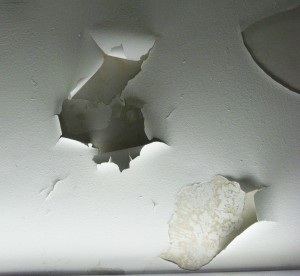
 (MCT)—Q: My parents have lived in their house for 48 years. The house is about 54 years old. They have always used good-quality paint.
About three years ago the ceiling began to peel. When a representative from the paint company came to inspect the situation he said it was the plaster on the ceiling and not the paint.
They have delayed painting because the ceilings continue to peel. What might be the cause and what do you suggest they do? Seems like too long a time for this to happen.
A: Moisture is a likely cause, high humidity in the house, inadequate ventilation after insulating, a leaky pipe in the shower, clogged dryer vent—just about anything—might cause the plaster to be damp and make it difficult for the paint to adhere to the surface.
Much of what I see on the Internet about peeling paint on plaster ceilings has to do with much older houses that have several coats of paint including the be-very-careful-with lead-based stuff.
I’m almost sure it is a moisture issue, because that’s what I have found over the years with my own older houses, much older than your parents’ place. Until you solve it, you won’t be able to repaint successfully, and then you’ll need to prep very carefully and thoroughly before you do.
I asked Deborah Zimmer and the Paint Quality Institute about what makes paint fail. The clues, she said, can be found in the way your paint is failing.
“The evidence is right there, you just need to know how to interpret it,” she said.
If your exterior paint is peeling, the culprit is probably moisture. Peeling occurs when wet wood swells underneath the paint, causing the paint film to loosen, crack, and ultimately peel.
Water can reach the wood through un-caulked joints or a leaky roof. Another possibility: water being forced underneath the roofing shingles because of clogged rain gutters.
Bubbles or blisters in your paint can eventually lead to peeling, so they can’t be ignored. This problem can usually be traced to either heat or moisture.
If your house was originally painted on a very hot day in direct sunshine, for example, blistering can result, especially if a dark-colored paint was applied.
Sometimes, moisture is to blame. Excess moisture from within the home can build up behind the paint and cause blisters (this is less likely with latex paint, which is vapor permeable); rain or heavy dew can also produce blisters if the surface preparation wasn’t done properly or if low-quality latex paint was used.
Checking is when horizontal and vertical cracks create a checkerboard pattern in your paint. It is evidence that the paint has lost its elasticity.
Checking typically occurs on surfaces with several layers of oil-based paint. With age, oil-based paint gets brittle. When temperatures rise or fall dramatically, siding can expand or contract, but the inflexible paint simply cracks and checks.
Chalking occurs when a fine powder forms on the painted surface. Although light chalking is a desirable way for paint to wear over time, excessive chalking can cause the color of the paint to fade very quickly—evidence that the protective paint film is rapidly eroding.
Cases of extreme chalking can usually be traced to the use of a lower-quality, highly pigmented paint, or use of an interior paint on an outdoor surface.
Often, discoloration is due to mildew, a fungus resembling dirt that thrives in warm, moist conditions. Thick shrubbery near the home can make the problem worse by shading the siding and restricting the flow of air.
A second type of discoloration is “bleed-through,” which can occur with staining woods like cedar and redwood. Failure to apply a primer before painting can allow tannins within the wood to seep through the paint and mar its appearance.
What to do if your home experiences one of these problems? If you can determine the cause, Zimmer advises you correct any condition that may have led to the paint failure. Then, when you repaint, do proper surface preparation, and use only top-quality coatings.
© 2011 The Philadelphia Inquirer