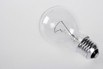
 RISMEDIA, Aug 2, 2011—(MCT)—Just as the lights were dimming on the incandescent bulb, its future is flickering with hope once again. Recently, Congress reopened the debate over whether the shift to energy-efficient alternatives is smart environmental policy or merely government intrusion into citizens’ lives. Never mind that a 2007 law signed by then-President George W. Bush already called for all incandescent light bulbs to be phased out nationally between 2012 and 2014.
Making the situation more confusing for consumers: California began implementing its own phase-out this year, ahead of the national mandates. The 100-watt incandescent bulb already is banned here.
The future remains unclear, but with renewed questions about what kind of bulbs are best, the Home section is launching an occasional feature in which we try to simplify complex consumer decisions. With so many choices in how we equip our homes—mattresses, water heaters, kitchen countertops, sheets (linen or bamboo?)—we will sort through the overwhelming number of options, explain new technology and provide a shopper’s cheat sheet.
In the case of light bulbs, consumer choices seem to expand with every passing month. Considerations for shoppers trying to sort out what they see on store shelves:
Energy Efficiency
The reason why incandescent bulbs were to be phased out is energy efficiency. The purpose of the 2007 act was “to move the United States toward greater energy independence and security.” Lighting accounts for 10 percent of U.S. household energy use, and the incandescent bulbs traditionally used in our homes are simply inefficient. Ninety percent of the energy that they produce is lost as heat.
Three alternative technologies are currently available. Halogen incandescent bulbs use about 25 percent less energy than traditional incandescents and last up to three times longer. Compact fluorescent lamps, or CFLs, use about 75 percent less energy and last up to 10 times longer. Light-emitting diodes, or LEDs, use 80 percent less energy and can last the longest — up to 25 years.
Cost
These alternatives cost more up front. Go to a big-box hardware store and a 60-watt incandescent bulb—the most commonly purchased bulb in the U.S.—is about 60 cents when bought in a multipack. A halogen bulb that generates an equivalent amount of light might cost as little as $1.50. An equivalent CFL might cost $2 to $5 apiece, depending on the brand and style. An equivalent LED is about $34 to $40.
However, all three alternatives deliver great savings in the cost of operation. A 60-watt incandescent bulb costs about $4.80 per year to light, according to the U.S. Department of Energy. The equivalent halogen bulb costs $3.50 per year. The equivalent CFL costs $1.20. The equivalent LED costs $1.
The typical American home has 50 light sockets. Upgrading just 15 of those sockets from incandescent bulbs to CFLs would save more than $50 per year in electricity expenses, on average, according to the Department of Energy. Though CFLs and LEDs require a larger investment up front, they save money and reduce energy usage in the long run.
How They Work
Incandescent bulbs work with a fila-ment, or wire, that is heated with electricity inside a tube of air until the filament glows. A halogen bulb works similarly, except the filament is heated inside a halogen gas capsule, which prolongs its life.
CFLs generate light by driving an electric current through a phosphor-coated glass tube that contains the gas argon and a small amount of mercury—about as much as would fit on the tip of a ballpoint pen. The mercury is necessary to absorb electrical current and to prompt the phosphor to glow, creating light. That chemical reaction needs extra electricity when the bulb is first turned on, which is why CFLs take some time to reach full brightness. The base of each bulb must be outfitted with electronics that control the flow of electricity.
LEDs are electronics. They’re illuminated by the movement of electrons inside a diode, usually a form of aluminum that can conduct electric current and generate light.
Light Quality
The majority of Americans have grown up with incandescent lights, which mimic natural sunlight and have a golden hue. They are dimmable.
Halogen bulbs have an almost identical light quality because they operate using filament technology similar to incandescents. Halogens also are dimmable.
CFLs have long been associated with light that is more blue—some would say unnatural or harsh. Many companies now offer bulbs with different color phosphor blends designed to look more natural, bringing out the red and yellow tones of skin, paint or furniture. Dimmable CFLs are increasingly available.
LEDs are able to mimic the hue of incandescents because their color is tuned electronically. LEDs are also dimmable.
Variety
Incandescent bulbs come in all sorts of shapes, wattages and colors. Consumers have fewer options with CFLs and even fewer with LEDs, but choices are growing and prices are dropping.
Disposal
In many U.S. cities, including Los Angeles, incandescent and halogen bulbs can be thrown in the trash.
CFLs and LEDs require special treatment. CFLs contain the hazardous material mercury; in Los Angeles, they need to be taken to a Solvents/Automotive/Flammables/Electronics center, also called a SAFE center, or dropped off at a recycling center that accepts CFLs. LEDs are electronics and need to be disposed as electronic waste, much like an old computer or television. (c) 2011, Los Angeles Times.